Coagulate vessels safely
Vascular lasers target haemoglobin in blood vessels, heating and collapsing unwanted vessels while sparing surrounding tissue. Wavelength, pulse duration, and spot size are matched to vessel diameter and depth.
Facial telangiectasia
Treat nose, cheeks, and chin thread veins.
Rosacea redness
Reduce persistent erythema and flushing.
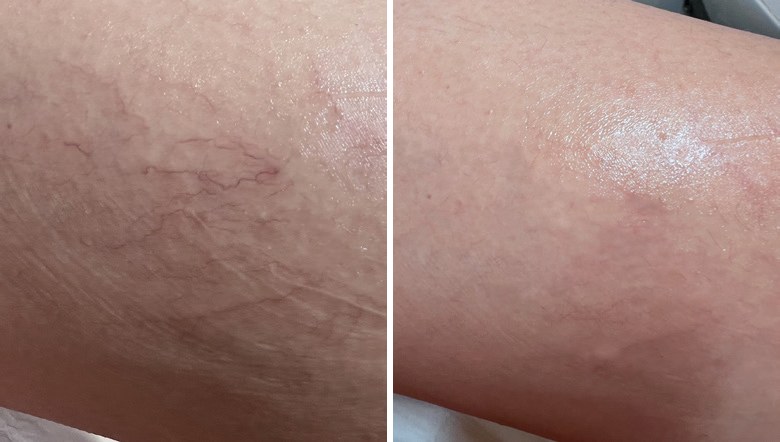
Leg veins
Address small spider veins on lower limbs.
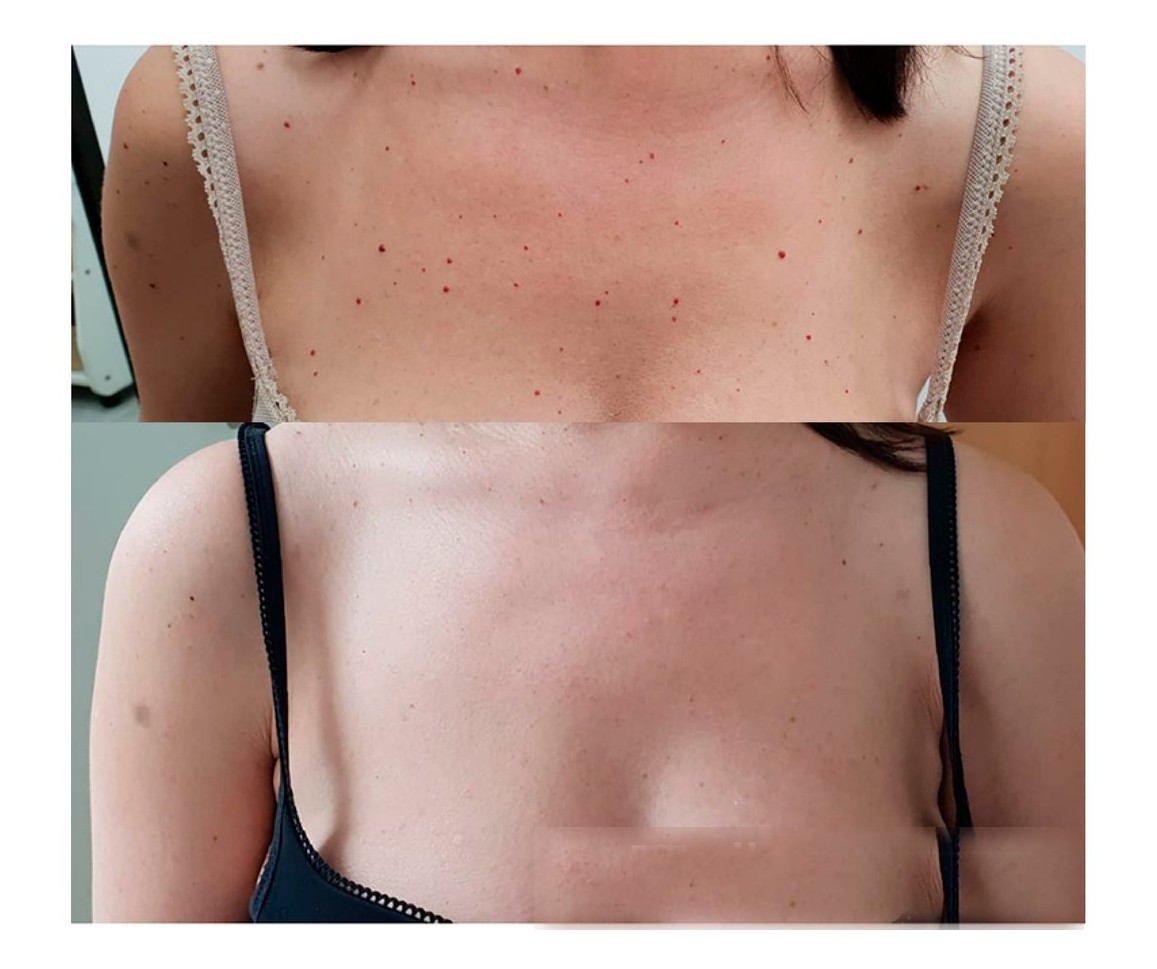
Angiomas
Clear cherry spots and benign vascular lesions.
At a glance
How the treatment
works
Vessel mapping
Assess diameter, depth, and flow.
Parameter selection
Set wavelength, pulse width, and fluence.
Skin cooling
Protect epidermis during vessel coagulation.
Laser application
Trace vessels or stamp individual lesions.
Follow-up
Reassess at 4–6 weeks for residual vessels.
Equip your practice
Primelaze supplies devices, hands-on training, clinical protocols, and nationwide service support.
Book a demo →Clinical benefits
Common questions
Long-pulsed 1064nm Nd:YAG (Polylase ND) is the gold standard for many facial and leg telangiectasias. The 450nm Vossman Blauman blue laser is also highly effective for superficial vascular lesions such as cherry angiomas and fine thread veins.
Patients feel a brief snap; contact cooling makes treatment comfortable.
Small vessels may clear in one session; diffuse rosacea often needs 3–4 treatments.
Downtime is minimal. Expect mild redness or slight swelling around the treated vessels for a day or two; most patients return to normal activities the same day.
Avoid direct sun and heat (saunas, hot showers, strenuous exercise) for a few days, apply SPF 50+ daily, and do not pick at any micro-crusts so the skin heals evenly.
Active tan, photosensitising medications, and certain blood thinners require caution.